Stretching is a simple yet powerful way to improve flexibility, relieve muscle tension, and enhance overall physical health. Whether you’re new to exercise or looking to add a gentle routine to your day, stretching at home is a convenient and effective option. This beginner’s guide will walk you through the basics of stretching, its benefits, and easy exercises you can start doing today.
Why Stretching Matters
Stretching is often overlooked, but it plays an important role in maintaining a healthy body. Here are some key benefits:
– Improves flexibility: Regular stretching helps lengthen muscles and tendons, making daily movements easier.
– Reduces risk of injury: Flexible muscles are less prone to strains and sprains.
– Enhances circulation: Stretching increases blood flow to muscles, promoting faster recovery.
– Relieves muscle tension: It can ease stiffness and reduce discomfort, especially after sitting for long periods.
– Boosts posture: Stretching tight muscles can correct imbalances and improve posture.
When and How to Stretch Safely
For beginners, it’s important to stretch safely to avoid injury:
– Warm up first: Stretch after a light warm-up like walking or marching in place for 5 minutes to get your muscles ready.
– Stretch gently: Move into each stretch slowly and stop if you feel pain. Mild discomfort is okay, but nothing sharp.
– Hold steady: Hold each stretch for 15 to 30 seconds without bouncing.
– Focus on breathing: Inhale and exhale deeply to relax your muscles during stretches.
– Don’t rush: Stretching should feel relaxing, not rushed or forced.
Essential Stretching Exercises for Beginners
Below are easy stretches to target major muscle groups. You don’t need any special equipment—just a comfortable space.
1. Neck Stretch
– Sit or stand tall.
– Slowly tilt your head to the right, bringing your right ear toward your shoulder.
– Hold for 20 seconds, then switch sides.
– This helps relieve neck stiffness from desk work or phone use.
2. Shoulder Roll and Stretch
– Stand or sit with your back straight.
– Roll your shoulders forward in a circular motion 5 times, then backward 5 times.
– Stretch your right arm across your chest, use your left hand to gently press your right arm closer.
– Hold for 20 seconds and switch arms.
– This loosens shoulder tension and improves mobility.
3. Chest Opener
– Clasp your hands behind your back.
– Straighten your arms and gently lift your chest while squeezing your shoulder blades together.
– Hold for 20-30 seconds.
– This stretch counteracts hunching and opens up the chest.
4. Seated Hamstring Stretch
– Sit on the floor with your legs extended straight in front of you.
– Keeping your back straight, slowly lean forward and reach for your toes.
– Stop when you feel a gentle stretch behind your thighs.
– Hold for 20-30 seconds.
– This improves flexibility in your legs and lower back.
5. Cat-Cow Stretch (Spine Flexibility)
– Start on your hands and knees with wrists below shoulders and knees below hips.
– Inhale as you arch your back, lifting your head and tailbone (Cow Pose).
– Exhale as you round your back, tucking your chin and tailbone (Cat Pose).
– Repeat for 5-10 rounds.
– This stretch promotes spinal movement and relieves back tension.
6. Standing Quadriceps Stretch
– Stand tall and balance on your left leg.
– Grab your right ankle behind you and gently pull your heel toward your buttocks.
– Keep knees close together and hips level.
– Hold for 20 seconds and switch legs.
– This stretch targets the front of your thighs.
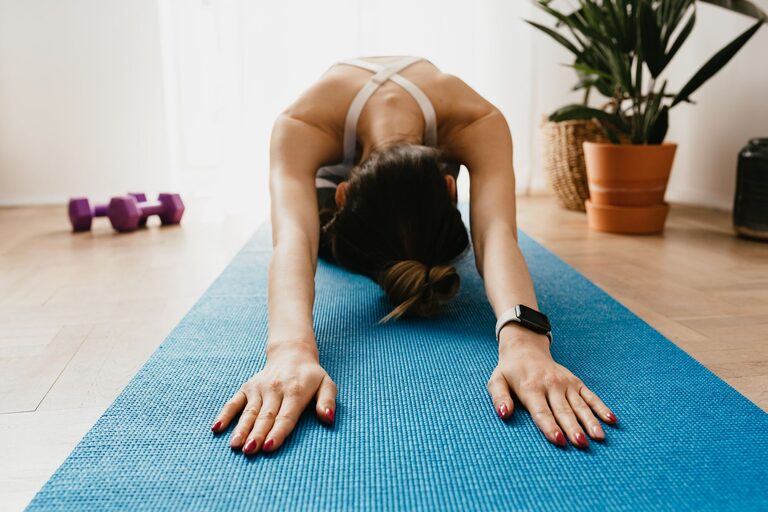
7. Child’s Pose
– Kneel on the floor and sit back onto your heels.
– Extend your arms forward on the floor and lower your forehead to the ground.
– Relax into the stretch for 30 seconds to 1 minute.
– This pose gently stretches the back and hips while promoting relaxation.
Tips for Building a Stretching Routine
– Start small: Begin with 5 to 10 minutes daily and gradually increase time.
– Be consistent: Stretch every day or at least 3-4 times per week for best results.
– Mix it up: Try different stretches to target various areas of your body.
– Use reminders: Set an alarm or link stretching to daily habits like after waking up or before bedtime.
– Listen to your body: Adjust intensity and duration based on how you feel.
When to Avoid Stretching or Seek Advice
– Avoid stretching injured or inflamed muscles.
– If you have chronic pain, joint problems, or medical conditions, check with a healthcare professional before starting a stretching routine.
– Stop any stretch that causes sharp or severe pain.
Final Thoughts
Stretching at home is a low-cost, accessible way to improve your physical health and feel more comfortable in your body. With just a few simple moves each day, you can increase your flexibility, reduce muscle tension, and enjoy greater ease in movement. Remember to stretch mindfully and consistently to see the best benefits over time.
Give these beginner stretches a try, and enjoy the positive changes they bring to your everyday life!
About the Author